Nature-based Solutions for climate-resilient and water-smart cities
Nature-based Solutions (NbS) are actions inspired and supported by natural processes that help address environmental and societal challenges while delivering multiple benefits for people, ecosystems and local economies.
Nature-based Solutions are increasingly recognised as key tools for climate adaptation and sustainable urban development.
To be truly effective, however, they must also consider water management and the skills needed to design and implement them.
Nature-based Solutions are often described as multifunctional infrastructures because a single intervention can deliver several benefits at the same time. In urban environments, where space is limited and cities face multiple environmental challenges, this multifunctionality becomes particularly valuable.
By introducing vegetation and natural elements into built environments, NbS help restore ecological functions that are often lost in highly urbanised areas. Even relatively small interventions such as green roofs, green walls or rain gardens can support biodiversity by creating habitats for insects, birds and other small species. These ecosystems are typically modest in size, but they contribute to reconnecting fragmented urban habitats and improving ecological balance.
NbS also influence how people experience urban spaces. Access to greenery has been linked to improved physical and mental health, greater well-being and opportunities for social interaction.
From an economic perspective, NbS are often comparable to conventional “grey” infrastructures in terms of investment costs. When properly designed and maintained, however, they can generate long-term value through lower operational costs and multiple co-benefits.
Water plays a central role in the functioning and effectiveness of Nature-based Solutions.
Vegetation depends on water not only for plant growth, but also for its capacity to regulate urban temperatures and improve microclimates.
Through a natural process known as evapotranspiration, plants release water vapour into the air.
This process absorbs heat from the surrounding environment and contributes to cooling urban areas, helping mitigate the effects of heatwaves.
Many NbS can also support urban water management. Solutions such as wetlands, vegetated swales, rain gardens or bioretention areas can infiltrate rainwater into the soil, recharging groundwater, and temporarily store excess rainwater, reducing surface runoff and helping prevent flooding during intense rainfall events.
These systems can facilitate water reuse by treating water (e.g.”greywater” collected from showers and washing basins) to be reused. They also improve stormwater quality by filtering pollutants and sediments before they reach rivers or drainage systems.
By slowing down water flows and increasing natural retention capacity, NbS can complement existing grey infrastructure. However, for these solutions to be truly sustainable, water use must be carefully considered during the design phase to avoid unnecessary consumption of potable water resources.
Designing and implementing Nature-based Solutions requires expertise from multiple disciplines.
Agronomists, ecologists, landscape architects, engineers and urban planners each contribute specific knowledge, from understanding ecosystem dynamics to integrating green infrastructures within urban planning and technical systems.
Equally important is the ability to communicate the value of NbS and engage communities and decision-makers. Building awareness and social acceptance helps ensure that these solutions are understood, supported and maintained over time.
In this context, Vocational Education and Training (VET) providers play a key role. By updating training programmes, professional courses and academic curricula, they can help equip both current and future practitioners with the knowledge and skills needed to design and implement Nature-based Solutions effectively.
Strengthening education and professional training in this field contributes to a broader shift in how cities approach climate challenges, recognising nature not simply as an aesthetic element, but as a strategic infrastructure for climate adaptation and urban resilience.
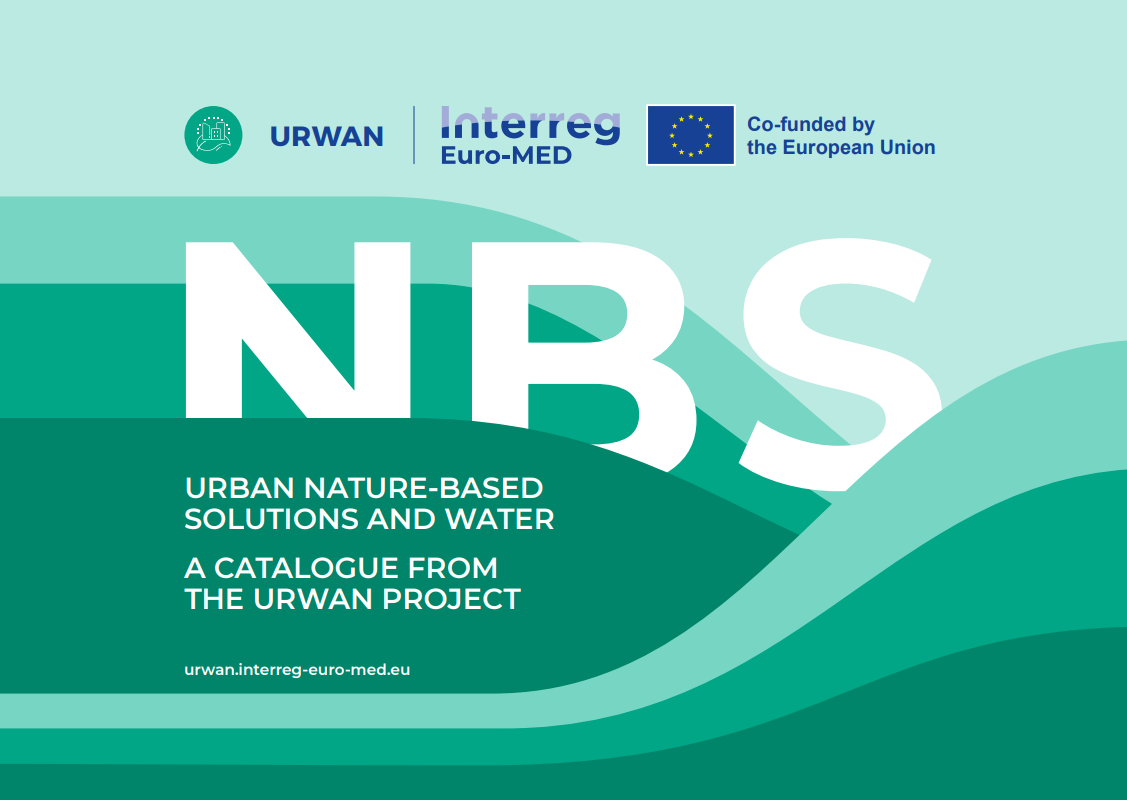
Urwan NBS
See the catalogue
This catalogue presents a collection of Nature-based Solutions (NbS) designed to support sustainable water management and urban greening. It brings together innovative and replicable solutions that strengthen water resilience, enhance urban biodiversity and improve the quality of life in cities and towns.
The resource was developed within the URWAN project and is structured around two main categories: Water-Snob NbS and Water-Smart NbS. Each solution includes technical features, environmental benefits and practical examples, helping planners and practitioners understand how NbS can be integrated into different urban contexts and contribute to more circular and efficient water use.
LANDS Resources
The LANDS Resources section brings together practical materials and tools for public authorities, urban planners and practitioners, as well as Vocational Education and Training (VET) providers working in urban contexts.
These resources support the integration of Nature-based Solutions into urban planning and decision-making processes, while also contributing to the development of updated training and learning pathways.

Storytelling video
Start Park

International Training

downloadable PDF resources
Partnership
Energy and Water Agency
The Energy and Water Agency (EWA) is a government agency whose main functions include the formulation, evaluation, monitoring, and implementation of national policies on the sustainable use of energy and water; the preparation and updating of plans to meet national and EU energy and water resource management targets; and the implementation of projects that support the achievement of these targets through energy efficiency initiatives, increased use of renewable energy, and water conservation measures. The Energy and Water Agency leads and coordinates EU co-funded projects and designs, develops, and manages a knowledge, education, information, and communication framework. At an international and regional level, the Energy and Water Agency follows the development of EU policy in the energy and water sectors on behalf of Malta and represents Malta in regional energy and water management fora.
energywateragency.gov.mt
Province of Avellino
The Province of Avellino is a public territorial body that coordinates 118 municipalities in inland areas. It is responsible for territorial planning, local development, and environmental policies. It recently established the “Green Communities” Mission Unit for Renewable Energy Communities, is implementing PNRR initiatives, and promotes integrated pilot projects.
In LANDS, it contributes to the adoption of NBS in urban policies and in training and VET programs, with the aim of strengthening climate resilience and multilevel governance.
www.provincia.avellino.it
IRIDRA
IRIDRA is an engineering firm with over twenty years of experience in the planning and design of sustainable water management solutions. It is recognised as a leading actor in Nature-based Solutions (NbS) and green infrastructure, including constructed wetlands, sustainable drainage systems, ecosystem services, and climate change adaptation and mitigation in the water sector. IRIDRA actively participates in European-funded projects, international NbS networks, and contributes to scientific and technical dissemination through publications, training activities and events.
www.iridra.eu
Sustainable City
Established in 2017, SCN is a non-profit organisation dedicated to supporting
municipalities in accessing European funding through technical assistance, networking, and proposal development. With over 85 members, including small and medium-sized
municipalities, institutions, and research organisations, SCN fosters collaboration for sustainable growth. The organisation provides expertise in research, project implementation, and policy development across key areas, aiming to drive innovation and impactful change at the local and regional levels.
www.sustainable-city.gr
SVI.MED.
SVI.MED – EuroMediterranean Center for the Sustainable Development – is a non-profit third sector organisation dedicated to advancing sustainable development across the Euro-Mediterranean region. Through research, territorial cooperation and the implementation of concrete actions, it supports EU cohesion policies by addressing the green transition, social and territorial cohesion, and the protection and enhancement of environmental and cultural resources. The organisation’s work covers the circular economy, sustainable tourism, sustainable agriculture and mobility, participatory and place-based processes, territorial engagement and strategic communication. It assists public and private stakeholders in innovation-driven sustainability pathways.
www.svimed.eu
Fundación MUSOL
MUSOL is a foundation created in 1998, whose main focus is capacity
building for public and regional entitites. Nowadays it promotes a more
sustainable democratic and just develompent through the capacity
building of local and regional entities and the active active citizen participation in governance processes in Europe, Africa and Latin America. In order to do this it develops social, educational and international cooperation intiatives, connecting the knowledge and experience in local and regional public administration of our members.
www.musol.org